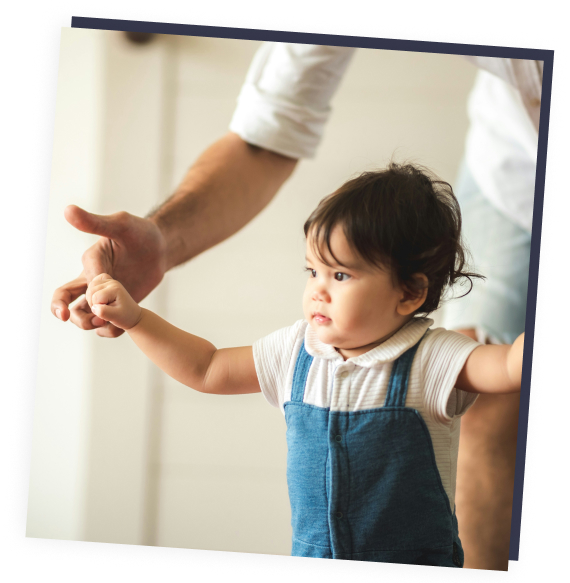
Introducing Your First Baby to Your New Baby
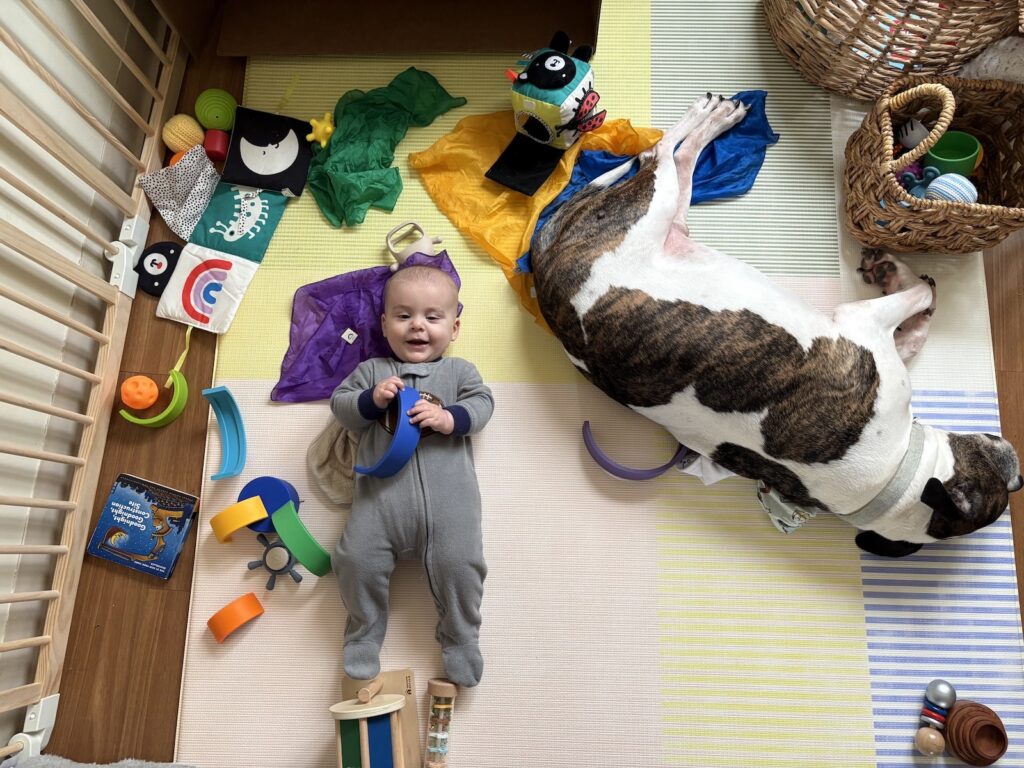
For many of us, the dog came first. They’ve had the run of the house, the best spot on the sofa, and your undivided attention for years. They’re not just a pet, they’re your first baby, your shadow, and of course, your best friend. But, now, you’re bringing home an actual baby. A loud, strange-smelling, sleep-disrupting, surprisingly powerful, tiny human who is about to completely reorganize life as your dog knows it.
The good news? Dogs and young children can form some of the most extraordinary bonds imaginable. The kind that shows up in photos decades later and makes everyone a little emotional. Getting there takes a bit of thought, especially during the first weeks and months. Here’s how to make the introduction go smoothly for everyone.
Tip One: Start preparing your dog before the baby arrives
Your dog is going to notice changes whether you prepare them or not, so you might as well make those changes gradually. If your dog is sleeping where the bassinet is going, shift that routine now. If you’re used to long walks twice a day, that might become tricky with a newborn. Start varying the schedule so unpredictability isn’t a shock. We played recordings of babies crying in the weeks before our little one arrived so the noise isn’t completely alien when it arrives at full volume at 2am. It sounds a bit over the top, but dogs are creatures of habit and a little advance warning goes a long way.
Tip Two: Let your dog meet the scent first
Before you bring the baby home from the hospital, send a blanket or hat the baby has been wrapped in ahead of time. Let your dog sniff it, investigate it, get used to it at their own pace. When the baby arrives, this scent won’t be completely new, which takes some intensity out of the first meeting. When the moment does come, bring the baby in calmly. If your dog is excitable, ask someone else to hold the baby while you greet the dog first. That burst of initial energy will settle much faster if they’re not competing with a fragile newborn for your attention.
Tip Three: Protecting your dogs sense of belonging
One of the most common mistakes made by new parents is accidentally associating the baby’s arrival with a sudden withdrawal of affection from the dog. Walks get shorter, cuddles disappear, the tone of voice changes. From the dog’s perspective, this strange new creature has arrived and everything good went away with it. Whenever you can, try to keep your dog’s key routines intact, or involve the baby in them! Walking the stroller with the dog alongside you, letting the dog be in the room during feeds, making a fuss of them when the baby is present. All of this teaches your dog that the baby is a good thing, not a rival.
Tip Four: Supervise always, but don’t hover anxiously
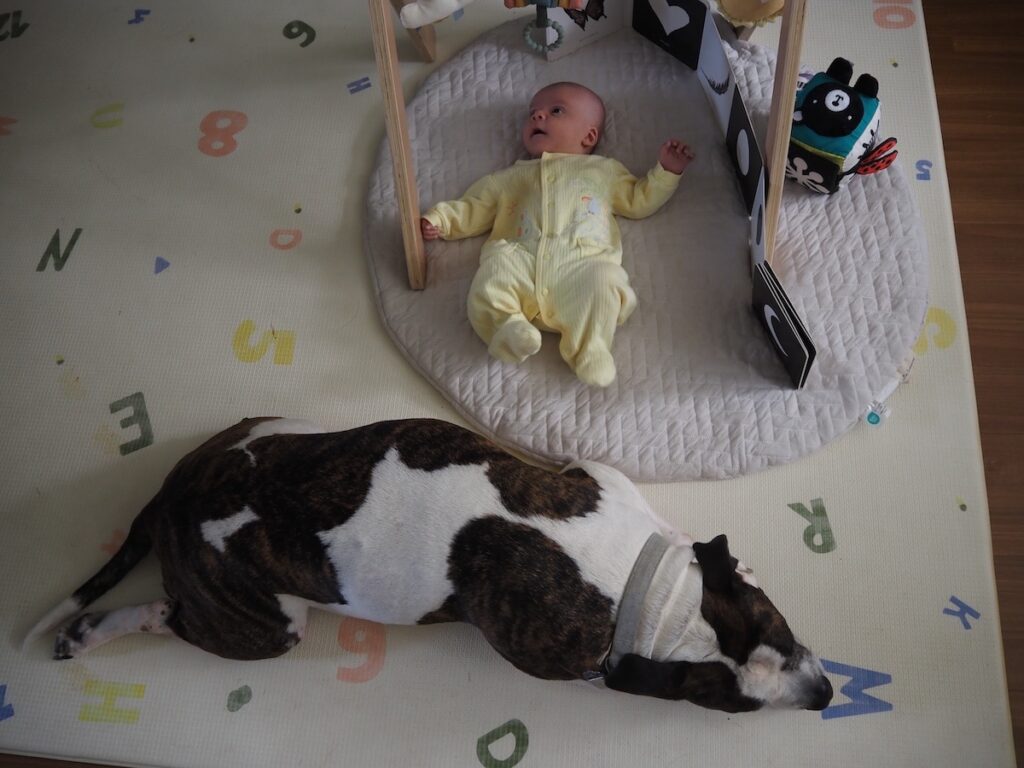
No matter how gentle your dog is, a baby and a dog should never be left alone unsupervised. This isn’t a reflection of your dog’s character, it’s just a sensible baseline that keeps everyone safe. That said, there’s a difference between calm, present supervision and hovering with visible anxiety. Which, dogs pick up on and become more unsettled around the baby because of. The goal is relaxed watchfulness. Baby gates are genuinely useful here. They let your dog be nearby and involved without direct access. This can be a helpful middle ground in the early years.
Tip 5: Let the friendship grow at its own pace
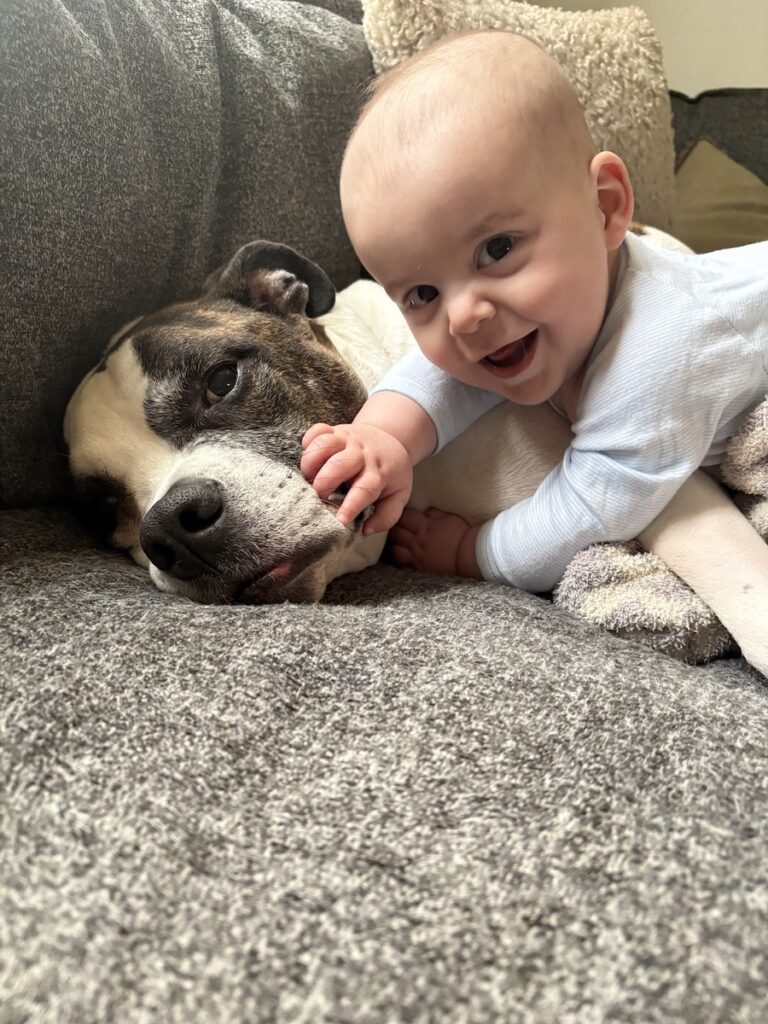
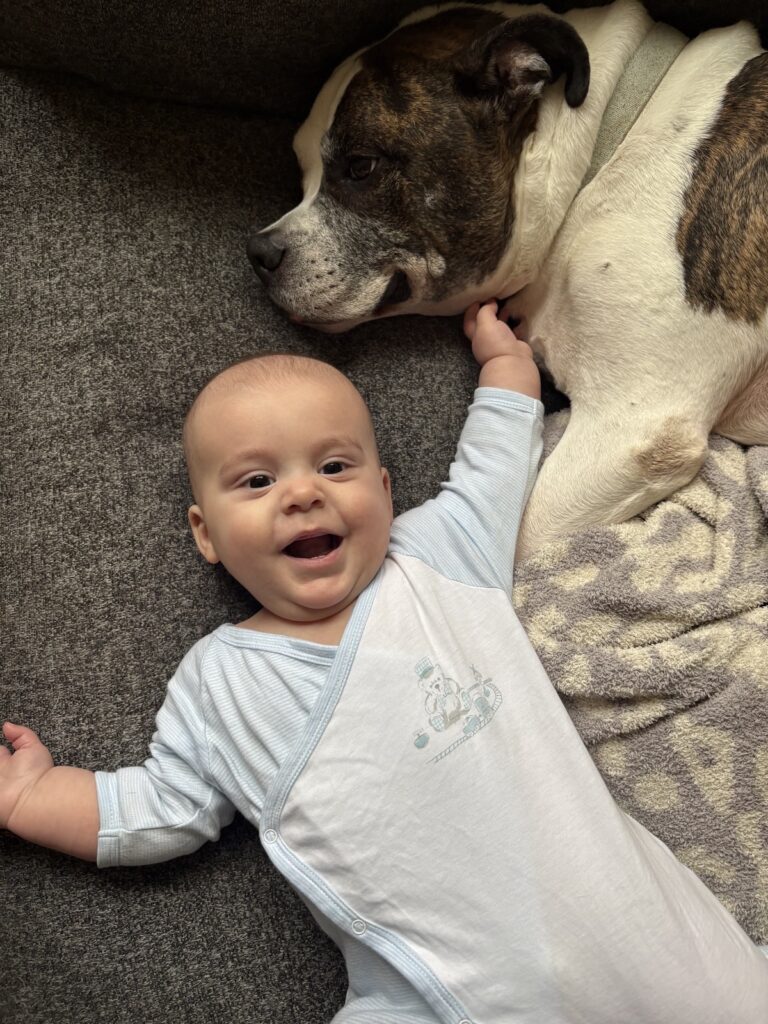
The magic tends to happen gradually and then all at once. First your dog sniffs the baby with cautious curiosity. Then one day the baby laughs at the dog, like really laughs. That whole body baby laugh that gets your dogs tail going in a way you haven’t seen before. Then they’re toddling after each other around the yard, and you’re frantically taking photos because you can’t quite believe this is your life. You can’t force this friendship, but you can create the right conditions for it. Calm introductions, consistent routines, and letting your dog feel safe and valued are what lay the foundation for everything that comes after.
A quick check in: As your child gets older nad more mobile, teach them early how to interact respectfully with the dog. No pulling ears, no disrupting them while they’re eating or sleeping, and no cornering them. A dog that feels safe around a child is a dog that stays calm. And a child who learns to respect animals early, carries that empathy with them for life.
Ask any adult who grew up with a dog and they’ll usually have a story. The dog that slept in their bed, the one who knew when they were sad before they could put it into words, or the companion on a thousand after school walks who never asked “what did you do today?”
Children who grow up with dogs tend to develop empathy, responsibility, and emotional attunement in ways that are hard to teach any other way. Research also suggests that they may have stronger immune systems and lower rates of anxiety. Though, honestly, watching my baby share his dinner with our patiently waiting pup, doesn’t require a study to tell me something good is happening.
The early weeks can feel like a lot of logistics. But, get through them with patience and consistency, and what comes next is one of the sweetest things about starting a family.
Ready to Become a Haven Member?
Whether you’re looking for full-time care, part-time support, or a routine that grows with your family, Haven membership is designed to meet you where you are.